When a Voice Isn't Proof: How AI Is Changing Senior Scams
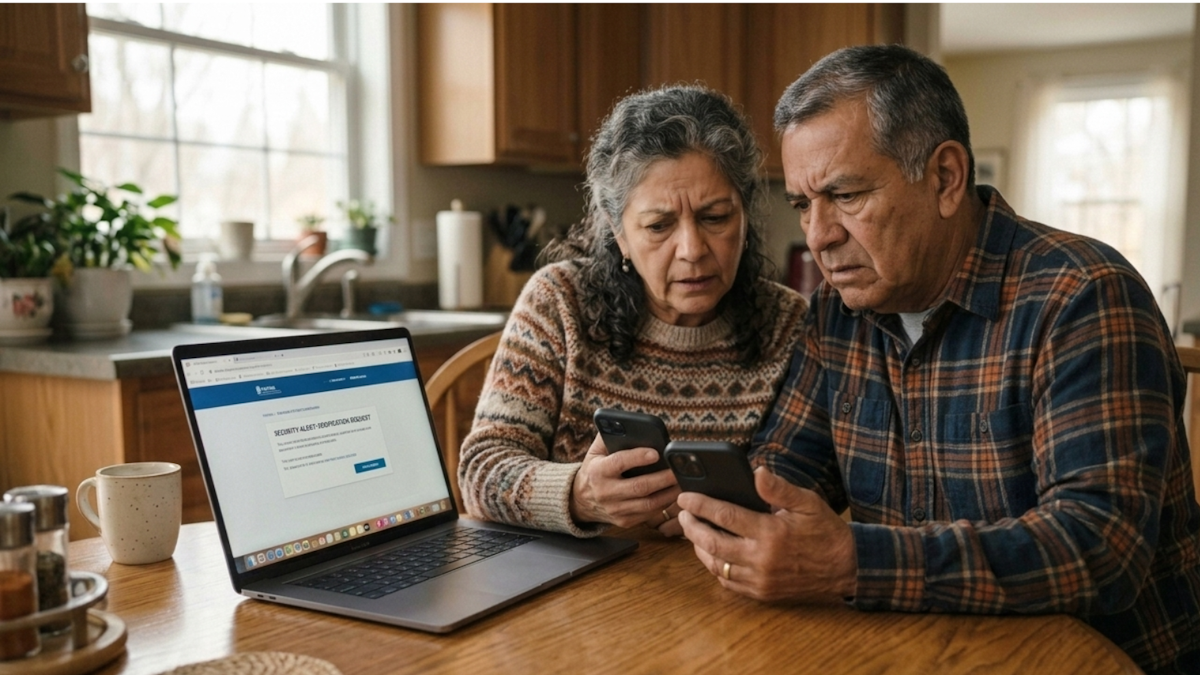
Voice cloning, fabricated identities and AI-generated content are giving scammers new ways to impersonate people older Americans may already know and trust.
For years, one of the simplest ways to recognize a scam was to pay attention to who was contacting you.
If an unfamiliar person called asking for money, personal information or access to an account, caution was usually straightforward.
Artificial intelligence is making that calculation more difficult.
A scammer may now be able to make a phone call sound as though it is coming from a family member. A fraudulent investment promoter can use AI-generated voices or video to appear more credible. An online relationship can be supported by fabricated identities and convincing digital content.
For older Americans, the development matters because fraud is already imposing enormous financial losses on people in their 60s, 70s, 80s and beyond.
The FBI's 2025 Internet Crime Report recorded 201,266 complaints from people age 60 and older, associated with approximately $7.75 billion in reported losses. The FBI also recorded 3,143 complaints from people 60 and older carrying its “AI Related” descriptor, associated with $352.5 million in reported losses.
The FBI's “AI Related” designation requires an important clarification. It is a descriptor attached to complaints, rather than a separate crime category. In other words, the figure does not mean that $352.5 million represents one distinct type of “AI scam.” It means those complaints contained information indicating that artificial intelligence was involved in the reported crime.
That distinction matters.
So does the larger picture.
AI is not replacing the scams that have targeted older Americans for years.
It is helping criminals make some of them more convincing.
The Scale of Fraud Against Older Americans
The senior fraud numbers reported by the FBI show why that development deserves attention.
In 2025, people age 60 and older reported:
- $3.52 billion in investment-fraud losses
- $1.04 billion in tech and customer-support scam losses
- $584 million in confidence and romance scam losses
- $568 million in business email compromise losses
- $413 million in government-impersonation losses
These figures represent the underlying fraud categories reported by older Americans. They are not AI-specific figures.
But they provide important context.
Artificial intelligence is entering an environment in which older Americans are already losing billions of dollars to scams built around trust, urgency and deception.
A Familiar Voice May Not Be Enough
One of the clearest examples is the family-emergency scam.
The Federal Trade Commission has warned that criminals can use AI technology to create a convincing imitation of a person's voice from a short audio recording.
Imagine receiving a call that sounds like your grandson.
He says he's in trouble.
He needs money immediately.
He doesn't want you to tell his parents.
The voice sounds right.
For someone who has spent decades recognizing that person's voice, that can be powerful evidence.
But it isn't necessarily proof.
The FTC recommends that consumers receiving unexpected emergency calls independently contact the supposed family member using a phone number they already know rather than relying on the incoming call or information provided by the caller.
That advice takes on new importance as voice-cloning technology becomes more accessible.
The Problem Isn't That Every Voice Is Fake
This does not mean older Americans should become suspicious of every phone call.
The lesson is much simpler:
A familiar voice should not be the only thing you rely on when an unexpected request involves money.
That is an important distinction.
AI does not make every phone call fraudulent.
It makes one traditional method of establishing trust—recognizing someone's voice—less reliable on its own.
Investment Fraud Deserves Particular Attention
Investment fraud is the largest reported source of elder-fraud losses in the FBI's 2025 data.
People age 60 and older filed 16,926 investment-fraud complaints, reporting approximately $3.52 billion in losses.
The FBI also identified AI being used to enhance investment fraud.
According to the bureau, criminals can use AI-generated videos and voices depicting celebrities, CEOs and other trusted figures to promote fraudulent investment opportunities. AI can also help criminals generate personalized communications with potential victims.
That creates a particularly important problem for retirees.
A fraudulent investment opportunity doesn't necessarily begin with an obvious request for a large amount of money.
The scammer may first establish credibility.
Then trust.
Then familiarity.
The financial request can come later.
A Professional-Looking Investment Doesn't Make It Legitimate
A person claiming to be a financial professional may have:
- A professional photograph
- A polished biography
- A company website
- Social-media accounts
- Video presentations
- Testimonials
- A recognizable voice
None of those things independently establishes that the person or investment is legitimate.
The FBI specifically warns that criminals use AI-generated content to make fraudulent investment opportunities appear more credible.
For an older adult evaluating an unfamiliar investment, independent verification is therefore more important than presentation.
The person should be independently verified.
The company should be independently verified.
And the investment itself should be independently researched before money changes hands.
Romance Scams Can Begin Without a Financial Request
Not every senior scam begins with an investment pitch or an emergency.
Some begin with companionship.
The FBI recorded 10,188 confidence and romance complaints involving people 60 and older in 2025, associated with approximately $584 million in reported losses.
These scams can develop over weeks or months.
A person may establish an online relationship, communicate regularly and gradually become someone the victim trusts.
Artificial intelligence can make fabricated identities and communications more convincing.
In 2026, federal prosecutors also brought a case involving alleged romance fraud targeting elderly Americans in which prosecutors described the use of artificial-intelligence software in the creation of false identities. The allegations remain allegations, and the defendant is presumed innocent unless proven guilty.
The significance is not that every online relationship is fraudulent.
It is that technology can now be incorporated into a deception designed to establish trust over time.
AI Can Make a Lie Look Personal
Personalization is one of the most concerning aspects of AI-enhanced fraud.
A generic scam message may be easy to ignore.
A message that uses your name, references your family, appears to understand your interests or comes from someone who seems familiar can feel very different.
The FBI says criminals can use AI to generate personalized conversations with potential victims.
Social media can make that easier because people often voluntarily publish information about their families, interests, travels, careers and daily lives.
A criminal doesn't necessarily have to know a victim personally to create the impression of familiarity.
Older Americans Are Already Losing Large Amounts to Impersonation
The broader impersonation problem is already well documented.
The FTC found that reports from adults 60 and older who lost $10,000 or more to certain business and government impersonation scams increased more than fourfold between 2020 and 2024.
For reported losses exceeding $100,000, the number of reports increased nearly sevenfold.
The FTC reported that combined losses exceeding $100,000 increased from $55 million in 2020 to $445 million in 2024.
Those figures are not AI-specific.
They are important because they show how much money can already be lost when an older person believes an impersonator is legitimate.
AI adds another mechanism for making that impersonation convincing.
The Emotional Pressure Is Often More Important Than the Technology
It is easy to focus on the technology.
Voice cloning.
Synthetic video.
AI-generated photographs.
Fabricated identities.
But the technology is only part of the equation.
The scam still depends on human emotion.
Fear.
Trust.
Love.
Urgency.
Concern for a family member.
The desire to protect retirement savings.
A scammer may use sophisticated technology to create the illusion of authenticity, but the ultimate objective is still to get the victim to act before they stop and verify.
That is why slowing down remains so important.
A Family Verification Phrase Can Create Another Barrier
The FBI recommends that families establish a secret word or phrase that can be used to verify someone's identity in an unexpected emergency.
The concept is simple.
A family agrees on a phrase before there is ever a problem.
If someone later calls claiming to be a child or grandchild and asks for money, the family member can ask for the phrase.
An impostor who has obtained photographs, names or even voice recordings may still not know the agreed-upon phrase.
It isn't a replacement for calling the family member directly.
It is another layer of verification.
Don't Use the Incoming Call to Verify the Incoming Call
This is one of the most important practical rules.
If someone calls claiming to be a family member, don't verify their identity using information they provide during the call.
Don't call the number they give you.
Don't rely on caller ID.
Don't use a link they send you.
Instead, use information you already have.
Call the family member at a number stored in your contacts.
Call the bank using the number printed on your statement or the institution's official website.
Find the investment firm's information independently.
The objective is to create a verification path the scammer does not control.
Urgency Should Trigger Verification
Many senior scams share a familiar pattern:
Unexpected contact → emotional pressure → urgency → financial request.
AI can make the first part more convincing.
It doesn't change the pattern.
If someone says:
“You have to do this right now.”
That is precisely when taking a few minutes to verify becomes more important.
A legitimate family emergency does not become less legitimate because you call another family member.
A legitimate financial institution does not become less legitimate because you independently contact it.
A legitimate investment opportunity should withstand reasonable due diligence.
The Goal Is Not to Fear Technology
Older Americans shouldn't have to stop using smartphones, social media, video calls or online services because criminals can misuse technology.
The goal is to understand what digital information can—and cannot—prove.
A photograph can be copied.
A profile can be fabricated.
A voice can potentially be replicated.
A video can potentially be manipulated.
A conversation can be manufactured.
That doesn't mean every digital interaction is fraudulent.
It means that digital familiarity should not replace independent verification when money is involved.
What Older Americans Can Do
A few practical habits can make impersonation scams more difficult to execute:
Establish a family verification phrase. Agree on one before an emergency occurs.
Keep trusted phone numbers separately. Don't depend on a number provided during an unexpected call.
Don't rely on caller ID. Treat it as information, not proof of identity.
Verify financial professionals independently. Find the firm's official information yourself.
Don't make major financial decisions during an unexpected conversation. Give yourself time to investigate.
Be cautious with online relationships involving money. A relationship that eventually becomes a request for money deserves particular scrutiny.
Talk to someone you trust before transferring significant funds. Another person may see warning signs that are difficult to recognize while you're under emotional pressure.
Be thoughtful about what you publish publicly. Personal information can help scammers construct more convincing approaches.
The Bottom Line
The FBI's 2025 data show that Americans 60 and older reported $7.75 billion in internet-crime losses across more than 200,000 complaints.
Within that broader population, the FBI identified 3,143 complaints carrying its AI-related descriptor, associated with $352.5 million in reported losses.
That number should not be interpreted as a separate category called “AI scams.” The FBI's designation identifies complaints in which AI was reported as a factor alongside an underlying crime.
But it does demonstrate something important.
Artificial intelligence has entered the fraud landscape affecting older Americans.
The technology can help criminals make an impersonation sound more familiar, look more authentic or feel more personal.
That makes one old rule more important than ever:
When money is involved, familiarity isn't enough. Verify independently before you act.
A familiar voice can be cloned.
A familiar face can be fabricated.
A convincing story can be manufactured.
But an independently verified identity is much harder for a scammer to fake.
Editorial Disclosure
This article is provided for informational and educational purposes only. It is not financial, investment, legal, tax, cybersecurity or other professional advice. Fraud methods and government guidance can change over time. Reported fraud statistics reflect complaints and losses reported to government agencies and may not represent the full extent of fraud occurring in the United States.
Sources & Editorial References
- FBI Internet Crime Complaint Center — 2025 IC3 Annual Report — Senior fraud complaints and losses, AI-related descriptors, investment fraud, confidence/romance fraud and AI-enhanced scam methods.
- Federal Trade Commission — Scammers Use AI to Enhance Family Emergency Schemes — Voice-cloning and family-emergency scam guidance.
- Federal Trade Commission — Older Adults and Impersonation Fraud — Data on high-dollar business and government impersonation losses among older Americans.
- U.S. Department of Justice — 2026 Romance Fraud Prosecution — Federal allegations concerning an alleged scheme targeting elderly victims and the use of AI-assisted false identities.